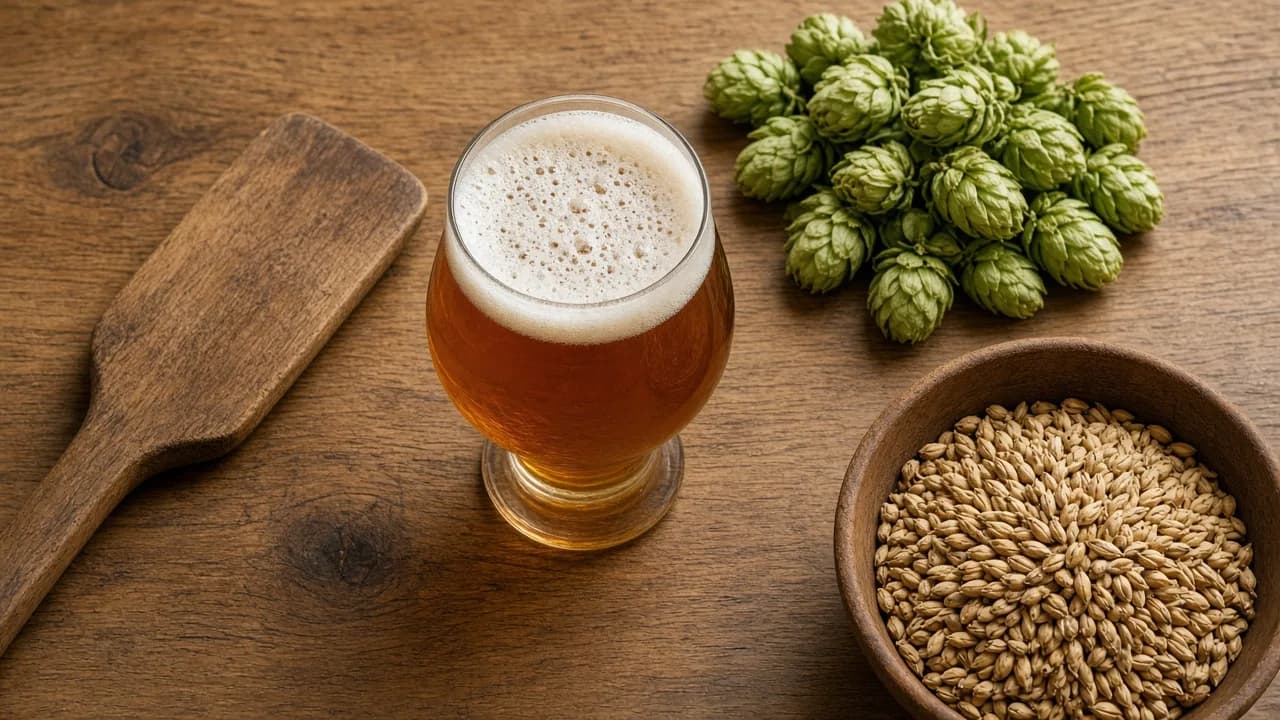
Home brewing in Australia is a fermented craft. You dissolve or mash sugars, cool them, pitch yeast, wait until a hydrometer stops moving, then package the beer, cider or wine so it can condition. That sequence is ordinary kitchen science. It is also the legal line the Australian Taxation Office draws between a home ferment and an excisable spirit.
This site exists to explain that craft in Australian conditions — summer fermenters that run too warm, winter garages that stall a lager, hard water in some cities, and the fact that a still is not a hobby accessory. It is not Parks Victoria, not a liquor licence desk, and not the shop that once lived on this domain. There are no cart buttons here.
What this guide covers
The rebuilt information architecture keeps the useful questions the old retailer library tried to answer, then writes them as guides instead of product listings.
- Beginners — sanitation, kit and extract process, and how to know a ferment is finished.
- Beer styles — families described with BJCP 2021 language, not rankings.
- Equipment — what each tool is for, including kegs and temperature control.
- Recipes — how to read and write a home recipe without cloning a commercial brand as a sales pitch.
- Cider and mead — juice and honey ferments that do not need a mash tun.
- Kombucha — tea, a SCOBY, and FSANZ alcohol labelling.
- Legal notes — distillation, stills and the ATO’s own words.
Heritage paths from the archive still resolve. Editorial URLs such as and keep rewritten essays. Dead shop, cart and display-table addresses 301 once to the nearest guide.
Fermenting is not distilling
The ATO’s spirits page is unambiguous. Beer — including home brew — is not treated as a spirit. Wine that wine equalisation tax applies to sits in a different tax system. Spirits are alcohol products created through distillation, “that is, using a still.” To use a still of any capacity to distil alcohol you must hold an excise manufacturer licence. The ATO says it does not grant licences to distil spirits for personal consumption; there needs to be a commercial purpose. Penalties apply if you manufacture spirits without a licence.
You can own a still of five litres or less without ATO permission only if you are not using it to distil alcohol. A still larger than five litres needs permission even when it is not used for alcohol. Permission to possess a still is not a licence to distil. Those sentences are the whole policy for this website: we do not publish how-to distillation, foreshot cuts, or spirit-essence recipes that assume a home still.
Fermented drinks are a different story. The ATO says beverages that are not produced by distillation, and do not contain spirit produced by distillation, can be made without an excise manufacturer licence where they are made for non-commercial purposes using non-commercial facilities and equipment. That is the home-brew, home-cider and home-wine exemption this guide relies on.
How a home ferment actually runs
Every successful batch, whether it started as a hopped kit tin or a full mash, follows the same hygiene and measurement habits.
- Clean, then sanitise. Soil comes off with a cleaner. Sanitiser only works on a surface that is already clean. The cleaning guide is the most useful page on this site if you only read one.
- Make a wort or must you understand. A kit already has hops and malt extract. An all-grain brew needs a mash that converts starch. Cider needs juice with enough fermentable sugar. Mead needs honey, water and nutrients.
- Cool before you pitch. Yeast is a living culture. Boiling-hot wort kills it. Cool into the published range for that strain.
- Measure gravity. A hydrometer or refractometer reading, taken a few days apart and stable, is how you know fermentation is finished. The calendar is a rumour.
- Package with a plan. Bottles need a known priming addition. Kegs need gas. Bulk priming is explained at its heritage path.
- Wait again. Green beer and harsh cider both improve with time in a cool, dark place. That is conditioning, not a failure of the recipe.
Australian summers punish ales that sit on a kitchen bench. If the only advice you take from this homepage is “control the temperature you actually have,” the rest of the library will make more sense.
Styles, not scores
We describe beer using the Beer Judge Certification Program 2021 Style Guidelines. Those guidelines are a shared vocabulary for colour, bitterness, gravity and fermentation character. They are not a ranking of Australian pubs and they are not a tasting-notes contest. When this site mentions Australian sparkling ale, Irish stout or a Czech-style pilsner, it is pointing at a family you can brew, not a medal table.
Cider and mead have their own traditions. Dry orchard cider, perry, traditional mead and fruit mead (melomel) are fermented drinks. They stay inside the personal-use exemption so long as you do not distil them and do not add distilled spirit as if a kitchen were a bonded warehouse.
Kombucha is fermented sweet tea. It can contain alcohol. FSANZ Standard 2.7.1 requires alcohol-content information on beverages at or above 0.5% alcohol by volume, and a nationally coordinated survey of fermented soft drinks found that a proportion of kombucha samples sat above that line, including samples above 1.15% ABV. Home brewers should treat kombucha as a ferment that still needs refrigeration and honest labelling if it is ever shared beyond the household.
What we will not invent
The quality bar for this rebuild is simple. We do not invent prices, opening hours, operators, rankings, awards, events, statistics or quotations. We do not republish named profiles from the old shop. Brand names that appear are trademarks of their owners and are used only where a reader needs to recognise a yeast laboratory, a maltster or a style origin.
When a fact is cited, the citation is a primary source: the ATO, the NHMRC, FSANZ, or the BJCP. If a number is not in those sources, it is not on this page.
Drink as if the guidelines apply to your own glass
Home brew is still alcohol. The NHMRC 2020 guidelines are the Australian reference for reducing health risks from drinking. Healthy adults should drink no more than 10 standard drinks a week and no more than 4 on any one day. The less you drink, the lower your risk of harm. Children and people under 18 should not drink alcohol. Women who are pregnant or planning a pregnancy should not drink; for women who are breastfeeding, not drinking is safest for the baby. DrinkWise publishes public-facing reminders that sit beside those guidelines.
If you only came here for a kit-beer weekend, start at beginners, keep a hydrometer next to the fermenter, and read the legal page before anyone offers you a still.