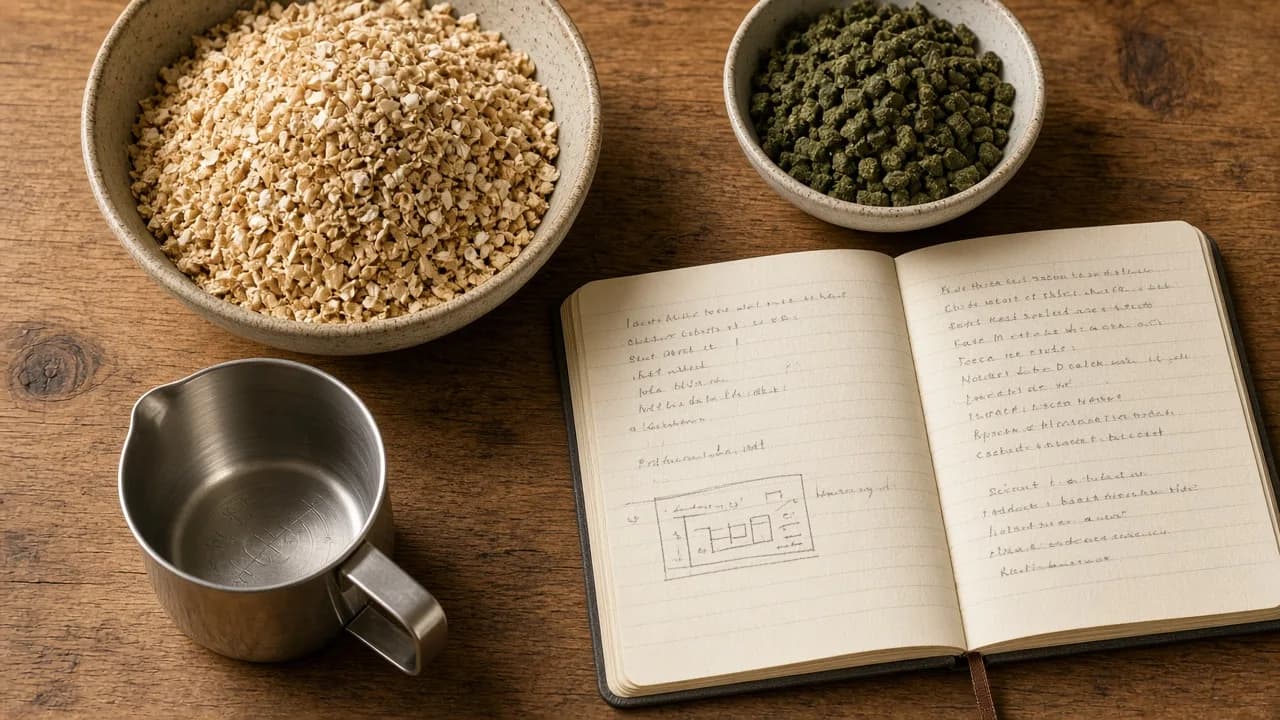
Malt is barley (or wheat, rye, oats) that has been soaked, germinated and dried so enzymes and flavour exist in a stable grain. Home brewers talk about base malt and specialty malt. Base malt can convert its own starch — and usually the rest of the mash — because it still has enzymatic strength. Specialty malt is there for colour and flavour.
The old library published a page per branded specification. Those URLs were not essays; they were catalogue-adjacent stubs. They now 301 here. For a number such as colour or moisture, read the maltster’s current sheet. This site will not invent one.
Base malts
Pale ale malt is the Australian and British-style workhorse: enough colour for gold ales, enough enzyme for a simple mash. Pilsner malt is paler and suits lagers and delicate pale beers; it often wants a slightly different mash mindset and a lager or clean ale yeast. Traditional ale malt from Australian maltings is what many local pale ales and sparkling ales actually sit on.
Extract brewers buy this as pale liquid or dry extract. The role is the same: most of the gravity.
Colour and melanoidins
Crystal or caramel malt is stewed so sugars crystallise inside the grain. It adds toffee, body and colour. A little goes a long way in a pale ale. A lot makes a beer flabby.
Munich and Vienna are kilned to bring bread-crust and malt aroma while often remaining able to contribute some conversion. They sit under amber ales and some lagers.
Melanoidin-style malts are used in small amounts when you want that baked-malt note without a decoction mash. Use them as a seasoning.
Wheat, oats, rye
Wheat malt helps foam and is the backbone of weissbier and many hazy pale ales. Unmalted flaked wheat or oats add haze and mouthfeel; they need a base malt that can convert them. Rye adds a spicy edge. None of these replace sanitation or temperature control.
Roast
Chocolate malt, black malt, roast barley, Carafa-style dehusked roast make stout and porter dark. They are a small percentage of the grist. If a beer tastes like burnt toast and ash, you used them as if they were pale malt.
Roast can also be a pinch in a brown ale or a schwarz-inspired lager. The BJCP ranges tell you whether the family is supposed to taste like coffee or like toast.
Adjuncts the old shop filed beside malt
Rice hulls help a sticky mash flow. Lactose sweetens a stout because yeast will not ferment it. Flaked maize lightens body in some pale lagers. These are tools. They are not a personality.
Storage
Grain goes stale. It also attracts insects. The bugs in your grain essay is the household version of that problem. Keep malt dry, sealed, and not beside the pet food.
How to use this page on brew day
- Pick a style.
- Choose a base that matches the colour of that style.
- Add one specialty idea — crystal or Munich or wheat or roast — until you can taste what it did.
- Mash or dissolve extract as all-grain or recipes describe.
- Write down what you used. Next time you can change one lever.
Named maltsters that appeared in the archive — Australian and imported — remain trademarks of their owners. Mentioning a name is not an endorsement ranking and not a stock list.
Crush
A crush that is too fine sticks a mash. A crush that is too coarse leaves sugar in the husk. Adjust the mill for the system you have. Pre-crushed malt is convenient and stales faster once the husk is open. Buy closer to brew day if you can.
Moisture and stale malt
Malt that smells like wet cardboard or like a shed will not become a delicate pilsner. Use it in a dark beer if you use it at all, or compost it. This page will not invent a shelf-life number that fits every climate. Australian humidity is a reason to seal the bin.
Colour is not strength
A dark beer can be modest in gravity. A pale beer can be strong. Roast and original gravity are different levers. The BJCP ranges keep them from collapsing into one mood.
Reading a real spec sheet
When you do open a maltster PDF, look at moisture, colour, and the stated use. Ignore marketing adjectives. If the sheet and this essay disagree on a laboratory number, the sheet wins — it is the primary source for that lot.
The forest of archive URLs that once wrapped those PDFs 301 here so the web does not keep a thousand empty rooms.