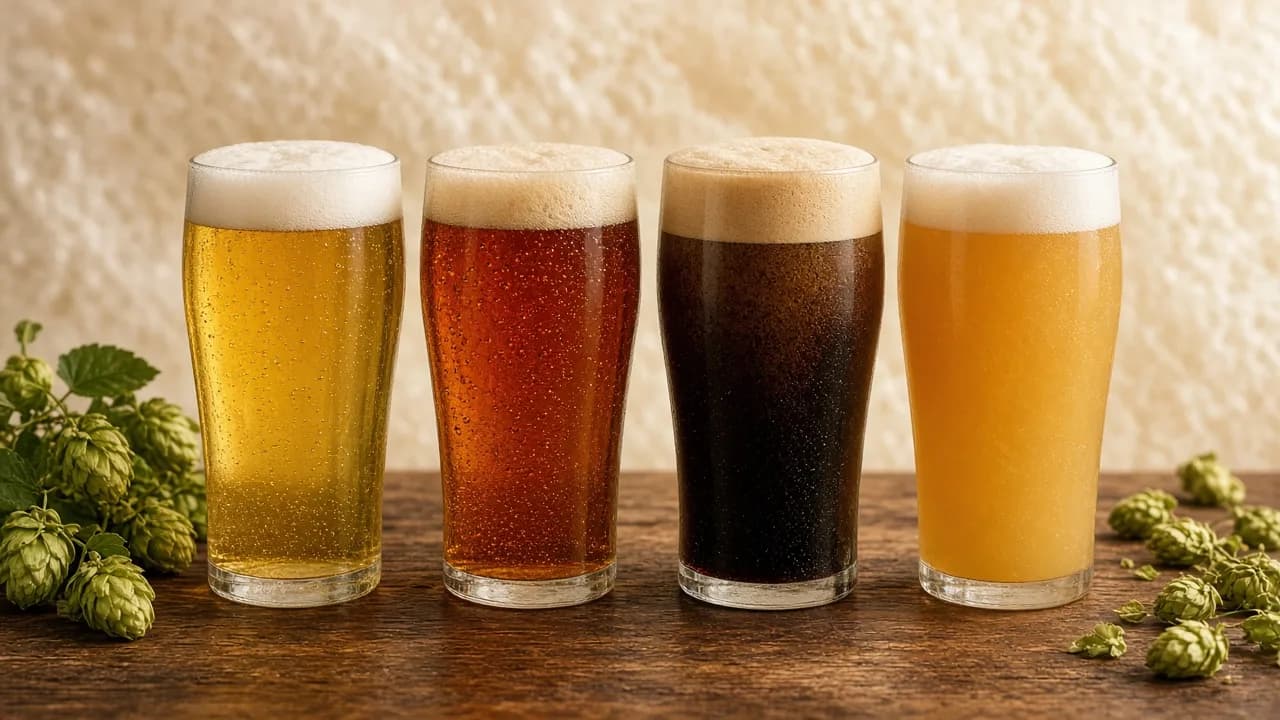
Beer styles exist so two brewers can talk about the same drink. The Beer Judge Certification Program 2021 Style Guidelines are the open vocabulary this site uses. They describe typical original gravity, bitterness, colour and fermentation character for families such as pale ale, stout and pilsner. They are not a ranking of Australian tap lists, not a list of awards, and not a reason to invent statistics about which style “wins.”
Home brewers in Australia can ferment any of these families. The constraint is equipment and climate, not a licence. Lager yeasts want colder, more stable temperatures than a sunny verandah will give you. Ale yeasts will work in a larger slice of the year if you pick a room on purpose.
This page stays on the legal side of the ATO line: fermented beer, not distilled spirit.
How to read a style before you brew
Open the BJCP entry for the family you want. Note four things only.
- Original and final gravity range. That tells you how much malt extract or mash you need, and how dry the beer should finish.
- Bitterness range. That tells you whether the hop schedule is a seasoning or the point of the beer.
- Colour. Pale, amber, brown or black — usually a function of crystal, Munich, wheat or roast malt, not food colouring.
- Fermentation character. Clean American ale, fruity English ale, clove-and-banana wheat, or lager-clean. That is a yeast and temperature decision.
Then ignore anything that sounds like a score. You are brewing for a household, not a competition unless you later choose to enter one.
Pale ales and the Australian sparkling family
Pale ale is the home-brew workhorse. A modest original gravity, pale malt as the base, and a hop character that can be earthy, citrus or pine depending on the variety. American-style pale ale leans on citrus and resinous hop aroma. English-style pale ale or bitter is more malt-balanced, with earthier hops. The BJCP keeps these in separate categories so the hop bill does not wander.
Australian sparkling ale sits in the same conversation as other international pale ales. Historically it is a pale, lively ale associated with Australian brewing from the colonial period onward. At home it is a pale-to-amber ale, often quite fermentable, with a dry finish and a yeast that can show a little fruit. You do not need a trademarked commercial clone to brew in that family. You need pale malt or pale extract, a restrained specialty-malt addition if you want colour, a hop variety that does not bury the malt, and an ale yeast fermented in a stable band.
If you want a hop-forward pale beer that is still sessionable, stay inside pale-ale gravity rather than stretching into double IPA numbers on a first attempt.
IPA, bitterness and haze
India pale ale, in modern guidelines, is a hop-emphasised ale. Bitterness, flavour and aroma hops all do work. Classic American IPA is firm and bitter. Hazy or New England-style IPA is softer, with hop aroma pushed through late additions and often a fuller mouthfeel from wheat or oats. Both are legal home ferments. Neither requires a still.
The practical Australian note is hop freshness. Hops in a warm shed lose the oils you paid for. Keep them cold, sealed, and use them. This site will not invent alpha-acid percentages for a specific crop year; read the lot analysis on the packet you actually have.
Wheat, Belgian-inspired and other esters
German-style wheat beer (weissbier) uses a wheat-tolerant yeast that can produce banana and clove notes when temperature and pitch rate cooperate. Belgian-inspired ales use yeasts that make spicy or fruity esters on purpose. These beers teach a lesson kit tins sometimes hide: the yeast is the recipe. If you ferment a wheat strain hot, you do not get “more character.” You get solvent.
Keep the published range. The yeast essay is the companion page.
Stout, porter and dark malt
Stout and porter get their colour from roast barley or dark malt, not from long boils alone. Irish stout in the BJCP sense is dry, dark and drinkable. Sweet stout is a different family. Baltic porter is stronger and often lagered. At home, the risk is acrid roast if you treat dark grain like the entire grist. Base malt still does most of the work; roast is a seasoning.
These styles hide minor haze and are forgiving of Australian water that is not alpine-soft. They are good second or third brews once sanitation is boring.
Lager, pilsner and the temperature tax
Lager families — international pale lager, Czech-style pilsner, Munich helles, festbier — want lager yeast and a cooler fermentation, then time. The BJCP descriptions assume that clean profile. If you cannot hold the cooler range, brew an ale that is allowed to be fruity. A “lager” fermented at ale temperature is just an ale with the wrong name on the label.
When you do have a fridge and a controller, lager is one of the most satisfying home projects in a hot climate, because the equipment is doing work the weather will not do.
Matching style to a first-year brewery
- No temperature control, warm house: English-style bitter, Australian sparkling ale, dry stout, or a wheat beer you can keep in the mid-to-high teens.
- A spare fridge: American pale ale, IPA, and then a lager.
- All-grain mash tun: any of the above, with Munich, crystal or wheat used as the guidelines suggest rather than as a pantry raid.
The heritage hub at /beer/ collects these families as a single beer-brewing doorway. Recipe construction lives at /recipes/. All-grain examples in method — not as commercial clones for sale — live at /brewers-library/beer-recipes-all-grain/.
What this page will not do
It will not tell you which Australian beer “won” anything. It will not invent IBU or ABV figures that are not in the BJCP ranges you can read yourself. It will not list prices for hop packets. It will not instruct you to add distilled spirit to beer.
Drink the beer you brew within the NHMRC 2020 guidelines. A tasting flight is still a set of standard drinks.
If you want the equipment that makes style control possible — a fermenter you can fit in a fridge, a kettle you can lift — read equipment next.
Water, bitterness and the story you tell yourself
Style is also water and bitterness, not only colour. A pale ale with a sulfate-forward water can taste crisper in the hop; a chloride-forward water can taste rounder. Those are tendencies described in brewing texts, not postcode magic. If you do not have a water report, brew the beer first. Do not invent a mineral recipe for a suburb this page has never tested.
Bitterness should match the family. An English-style bitter that you hop like a West Coast IPA is a different beer, and that is fine if you meant it. It is confusing if you still call it bitter when you serve it. Use the BJCP name as a promise to yourself.
Seasonal brewing without inventing a festival
Australian seasons change the sensible style more than they change the law. In a hot quarter, brew something that can live in the temperature you can actually hold. In a cool quarter, try the lager you postponed. There is no official “national homebrew week” on this site because we would have to invent it.
Holiday spice beers are a choice, not a requirement. If you add spice, add it as if it were a hop: late, measured, and written down.
Serving the style you brewed
Glassware and temperature change what you taste. A wheat beer in a tall glass shows foam. A stout slightly warmer than fridge-cold shows malt. None of that needs a branded glass SKU. A clean glass you already own is enough.
Carbonation is part of style. Sparkling ale wants life in the glass. An English-style ale may want less. Bulk priming is how you choose that on purpose.
When you pour a flight, count drinks. The NHMRC 2020 guidelines do not pause for education. Four standard drinks on one day is the healthy-adult cap in those guidelines, not a suggestion for a fifth sample.