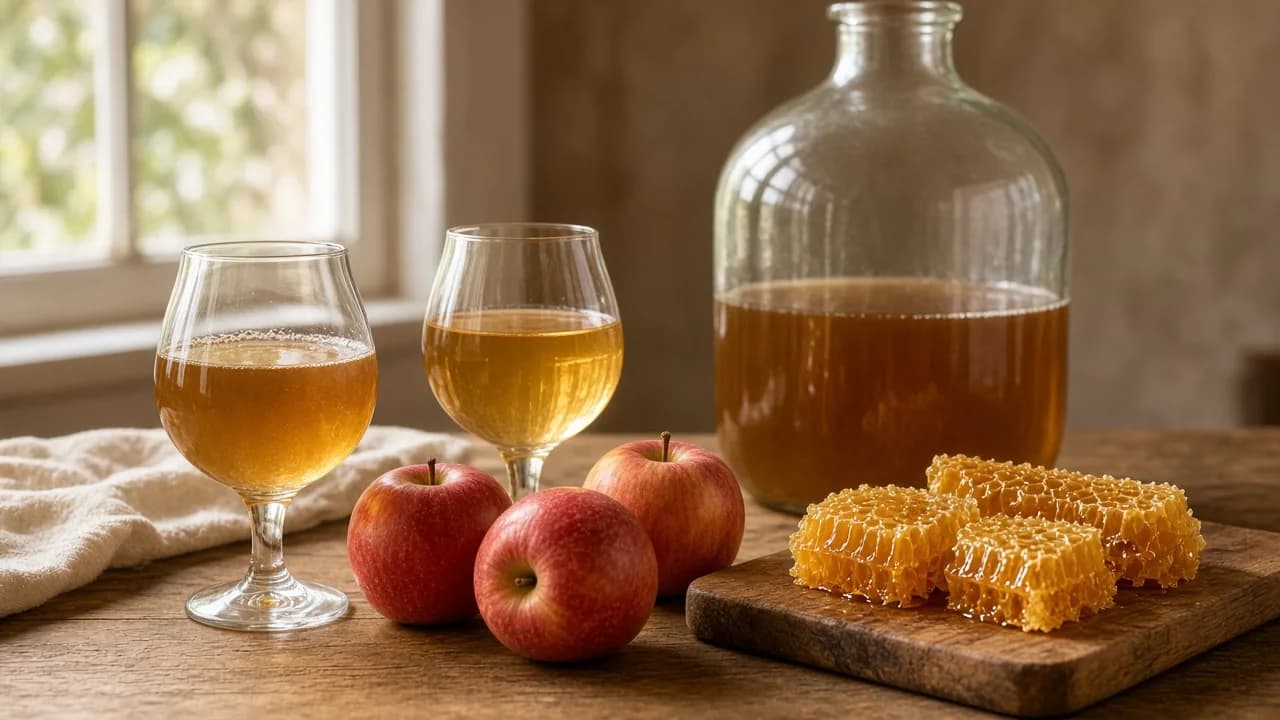
Cider and mead are fermented drinks. In Australia you can make them at home for personal use without an excise manufacturer licence, because they are not produced by distillation and — if you leave them alone — they do not contain distilled spirit. That is the same ATO distinction this site uses for beer. The moment someone proposes a still, a “cider brandy,” or a kitchen reflux column, you are outside this guide and inside the legal page.
This page is method. It is not a cider-kit catalogue. Old product listings 301 here.
Cider: juice, yeast, time
Cider is what happens when the sugar in apple juice becomes ethanol and carbon dioxide. You can start from:
- Fresh pressed juice with no preservatives that would inhibit yeast.
- A retail juice you have checked for potassium sorbate or excessive preservatives.
- A dedicated cider kit, which is a concentrated juice or a flavoured fermentable base.
Wine yeast, cider yeast or a champagne strain are common choices because they tolerate the acidity and can ferment dry. Beer ale yeast can work for a softer, English-style cider. The laboratory’s published range still applies.
Nutrients matter more than they do in a malt wort. Apple juice is not a complete yeast diet. A yeast nutrient addition, used as the nutrient maker directs, reduces the risk of a stinky, stressed ferment. This site will not invent a milligram dose for a brand it does not sell.
Process, in order:
- Sanitise the fermenter and tools the same way you would for beer. See cleaning.
- Measure original gravity and write it down. Juice varies.
- Pitch yeast into juice that is already in the published temperature band.
- Keep the fermenter out of the sun. Cider likes a stable, cool room more than a hot shed.
- Wait until gravity is stable. Cider can look like it has finished while it is still quietly working.
- Rack off the heavy sediment if you want a cleaner flavour, then package.
A dry cider can be packaged still or given a priming charge for sparkle, using the same bulk priming idea. If you backsweeten, remember that living yeast will ferment new sugar unless you understand stabilisation. Guesswork here is how people make bottle bombs. If you are not ready to study stabilisation, ferment dry and sweeten a glass in the jug, not the whole batch.
Pear juice makes perry. The method is the same family: fruit sugar, yeast, time.
Australian apples and the myth of a secret orchard
You do not need a named heritage orchard to ferment cider. You need juice that can ferment and a plan for acidity. Culinary apples can make a pleasant dry cider. A blend of sharp and sweet juice is a traditional idea. This page will not invent a ranking of Australian apple regions or a festival calendar.
If you press fruit, keep the press as clean as the fermenter. Wild ferments are possible; they are also less predictable. A known yeast is the beginner’s friend.
Mead: honey, water, nutrients, patience
Mead is honey diluted with water and fermented. Traditional mead is just those ingredients plus yeast. Melomel adds fruit. Metheglin adds spice. The names are useful; they are not awards.
Honey is short of some nutrients yeast expects. Stressed mead ferments smell like trouble and take months longer than they need to. Modern home mead makers commonly use a staged nutrient schedule and oxygen at the start, then leave the vessel closed as gravity drops. Follow a published nutrient method from a yeast laboratory or a recognised mead-making reference. Do not invent one from a forum memory.
Process outline:
- Sanitise.
- Dissolve honey in water to a gravity that matches the strength you want. Stronger meads need more yeast and more time.
- Pitch a wine or mead yeast in its published range.
- Aerate at the beginning, then stop introducing oxygen once fermentation is active and alcohol is rising.
- Measure gravity across weeks, not hours.
- Rack when the mead has cleared enough to leave most yeast behind.
- Age. Harsh young mead is normal. Months in a full, sealed vessel do work that a weekend cannot.
Mead does not need a mash tun or a hop schedule. It does need patience that beer drinkers sometimes refuse to give.
Shared rules with beer
- Gravity, not the airlock, decides when you package.
- Temperature swings produce off flavours.
- Sanitation is not optional because “it’s only juice.”
- These drinks are alcohol. The NHMRC 2020 guidelines still cap a healthy adult at no more than 10 standard drinks a week and no more than 4 on any one day.
Cider and mead can be stronger than a session ale. Measure final gravity and, if you label anything you share, remember FSANZ Standard 2.7.1 if a beverage would be treated as alcoholic for labelling purposes. A household jug does not need a commercial label. A market stall does, and that stall is not “personal use.”
What not to do
Do not distil cider or mead. Do not add a still “to concentrate it.” Do not treat spirit essences as a cider recipe. Those archive categories are gone on purpose.
Do not invent a commercial cider clone with fake laboratory numbers. Write a juice source, a yeast and a gravity.
The heritage path /cider/ is a shorter doorway into the same craft. /wine/ covers grape and kit wine, another fermented neighbour. /kombucha/ is a different organism and a different alcohol conversation.
Sulphite, sorbate and the sentence you should not skip
Home cider makers meet two additives in kit instructions: sulphur dioxide (often as campden) and potassium sorbate. They are used, carefully, to discourage wild microbes or to reduce the chance that a sweetened cider will ferment again in the bottle. They are not seasoning. If you do not understand a dose, ferment dry and sweeten the glass.
Never assume a supermarket juice is “clean enough” because it tastes sweet. If it contains sorbate already, a yeast may struggle to start. If it does not, wild yeast may start for you. Read the label. Pitch on purpose.
Tannin and acid, without a vineyard myth
Some apple juice is flabby. A little acid (often as a measured acid blend in kit culture) or a tannin addition can give a dry cider a shape. Use a teaspoon discipline, taste, and write it down. Do not chase a fake “Somerset” story this page will not invent.
Pears can be low in acid and odd in tannin. Perry rewards patience more than it rewards spice racks.
Mead variations that stay legal
Fruit mead (melomel) is honey plus fruit. Pyment is honey plus grape. These are still ferments. They are not fortified wines unless you add distilled spirit — which you should not, unless you enjoy the ATO conversation.
If you add fruit, sanitise the vessel, and accept that gravity will move again. Fruit brings sugar. Measure.
Packaging cider and mead
Champagne bottles and proper closures exist because some of these drinks carbonate like they mean it. If you are not ready for that pressure, make a still cider or mead and keep it in a full, sealed vessel in the cool.
Kegging cider works the same way as kegging beer: finished gravity, clean posts, measured gas.
A year of ferments
You can brew beer in a week of attention and drink it after a short condition. Cider often wants more settling. Mead wants more months. Plan the vessel count so you are not raiding a young mead because the beer fridge is empty. That is not a statistic. It is how people drink things too early.
Keep the NHMRC 2020 guidelines on the cellar door you just improvised. Honey wine is still wine.
If you take nothing else from this guide, take the hydrometer and the legal line: ferment juice or honey; do not distil them; measure until the number holds; package on purpose. That is enough cider for a year of Australian weekends.
Write the juice source on the same card as the yeast. Future you will want that sentence more than a flavour name.