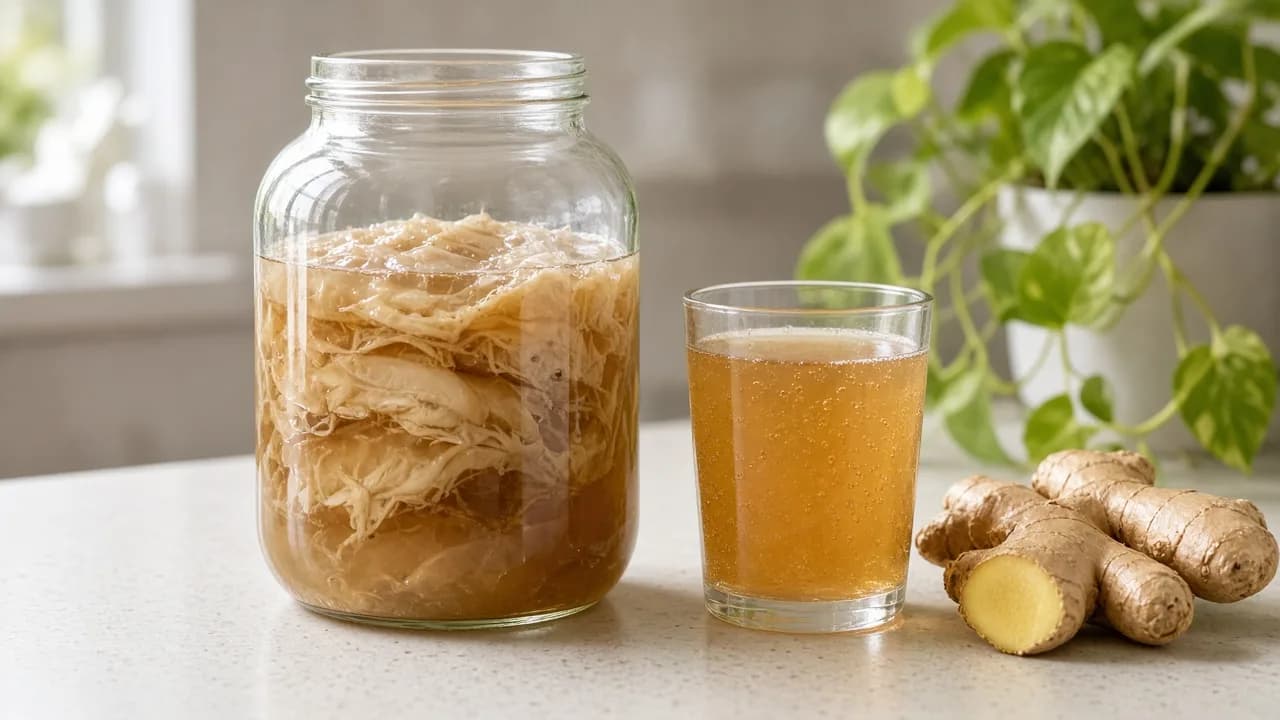
Kombucha is a fermented tea. You dissolve sugar in brewed tea, cool it, and add a SCOBY — a cellulose-rich symbiotic culture of bacteria and yeast — plus enough acidic starter liquid from a previous batch. The culture eats sugar, acidifies the tea, and produces a tart, lightly sparkling drink. It is not beer. It is not a spirit. It is still a ferment, and ferments produce ethanol.
Food Standards Australia New Zealand Standard 2.7.1 requires alcohol-content information on beverages that contain 0.5% alcohol by volume or more. A nationally coordinated survey of fermented soft drinks (samples collected in 2017 and 2018) found that a proportion of kombucha samples contained alcohol above 0.5% ABV, including samples above 1.15% ABV, and that alcohol can continue to rise over shelf life. Those are published findings, not guesses. Home brewers should assume a jar on a warm bench can wander across the same line.
This site is a guide, not a bottling plant. If you ever sell kombucha, you step into the Food Standards Code and, depending on strength, liquor licensing. Personal household jars are still worth treating as alcohol when you pour them.
A straightforward first ferment
- Brew black or green tea in clean water. Avoid teas with heavy oils if you are still learning; oils can bother a culture.
- Dissolve white sugar while the tea is hot. The culture needs that sugar. “Sugar-free kombucha” is not a beginner project.
- Cool the sweet tea to a comfortable warm-room temperature. Hot tea cooks a SCOBY.
- Add starter liquid from a previous batch or from an unflavoured bottled kombucha that still contains a living culture, then add the SCOBY.
- Cover the vessel with a breathable cloth that keeps insects out. This is not an airlocked beer ferment.
- Wait, tasting with a clean spoon, until the acidity suits you. Warm rooms move faster. Cold rooms stall.
- Remove the SCOBY and enough liquid to start the next batch. Refrigerate the drink you will consume, or bottle it with an understanding that sugar and living yeast can raise both fizz and alcohol.
Flavour fruit or ginger in a second vessel if you want, then refrigerate. Long, warm secondary ferments in sealed bottles are how people make kombucha geysers and how alcohol creeps up.
Hygiene without folklore
Wash vessels so they are visibly clean. Use food-safe sanitation on tools that go into the tea. Do not use a SCOBY that smells putrid, shows fuzzy mould in colours that do not belong on a healthy pellicle, or came from a source you cannot describe. When in doubt, compost the culture and start from a known liquid.
Keep the jar off the floor, away from raw meat prep, and out of direct sun. A kitchen that also brews beer should not share a stained siphon between a stout and a SCOBY without cleaning.
Children, pregnant people and anyone who should not drink alcohol should not be served kombucha as if it were juice. The NHMRC advice that people under 18 should not drink alcohol, and that women who are pregnant or planning pregnancy should not drink, applies to drinks that contain alcohol — including a home ferment that was marketed to you as wellness tea.
Alcohol, labelling and honesty
You will not get a laboratory ABV from a kitchen jar without a test. That is a reason for caution, not a reason to invent a number. If you share kombucha beyond the household, say that it is fermented and may contain alcohol. If you were a manufacturer, Standard 2.7.1 would tell you how to write that strength, how to count standard drinks above 0.5% ABV, and when a pregnancy warning is required (alcoholic beverages above 1.15% ABV).
The FSANZ survey also noted that alcohol can increase over shelf life. Refrigeration and a realistic “drink by” window are part of the method.
What kombucha is not
It is not a way to distil. Running kombucha through a still would be manufacturing a spirit. The ATO requires a licence for that, and does not grant licences for personal consumption.
It is not a substitute for medical care. This site offers no health claims, no infection-treatment stories, and no invented clinical statistics.
It is not a product we sell. There is no SCOBY cart on this domain.
Beside the rest of the library
If you came here from beer, you already understand sugar, yeast and time. The difference is the open vessel, the bacteria, and the alcohol labelling conversation that beer drinkers take for granted. Cider and mead are closer cousins than they look: ferments that people forget are alcohol.
Keep reading the legal page if anyone around the jar starts talking about a still. Keep reading the NHMRC guidelines if the jar is pouring more than a tasting sip.
Tea, sugar and the culture’s diet
Black tea is the usual beginner base because it is predictable. Green tea makes a lighter cup. Herbal blends without actual tea can starve a culture that expected Camellia sinensis. If you experiment, keep a backup SCOBY in a spare tea so one failed jar does not end the line.
White sugar is easy for the culture to use. Honey and raw sugars change flavour and can be harder to repeat. They are not illegal; they are just more variables. This page will not invent a health ranking of sugars.
The culture needs acid starter liquid as well as the pellicle. A SCOBY dropped into sweet tea with no starter is a different risk profile — more time in the pH band microbes enjoy.
Vessels and cloth
Glass is easy to inspect. Food-safe ceramic works if the glaze is sound. Avoid reactive metals. The cloth lid must keep vinegar flies out and still let the culture breathe. An airlock like beer is the wrong reflex; kombucha is an aerobic community in the first ferment.
Size the vessel so you can lift it. A huge jar that you cannot clean is a museum of last month.
Second ferment and fruit
Fruit, ginger and juice wake the yeast up again. Use strong bottles if you want sparkle, burp them if you are unsure, and refrigerate when the fizz is enough. Warm second ferments in thin glass are how kitchens get sticky.
Fruit also adds more fermentable sugar, which is the alcohol conversation again. The FSANZ survey noted that process choices — including how a drink is carbonated and whether inclusions are added — influence alcohol. You do not have their laboratory. You have a fridge. Use it.
When to throw a culture out
Fuzzy mould that is not the usual smooth pellicle, colours that look like contamination rather than tea, or a smell of rot rather than tart tea — those are discard signals. A brown yeast raft under a SCOBY is often just yeast. Learn the difference from a trusted fermentation reference, not from a caption we would have to invent.
Wash the jar and start from a known liquid if you are unsure. The cost is tea and sugar, not a medical experiment.
Household rules
Label the jar so a guest does not think it is iced tea for children. Keep it away from pets that might drink from the cloth. Do not promise anyone that kombucha is non-alcoholic unless you have a test that says so.
If you also brew beer in the same kitchen, sanitise shared tools. The organisms are not the same. The cleaning habits still apply.
Treat the first jar as a hygiene and labelling rehearsal, not as a wellness project. Brew the tea, cool it, pitch a known culture, wait until it is tart enough, refrigerate, and speak honestly about alcohol. That is the whole method. The SCOBY is not a pet you owe medical claims to. It is a ferment you owe a clean jar.
If a guest asks whether it is alcoholic, say that it can be, cite FSANZ, and offer water. That is hospitality and it is accurate.
Keep the cloth dry on top so it does not become a fly mat. Keep a starter jar so one failed batch does not end the culture. Those two household habits matter more than a flavour recipe.